ATOH / CTOH
Probably one of the biggest and most beautiful projects ever done on SL. I genuinely don't say that lightly — this thing took months of work, a complete rethink of how SCP:SL plugins are structured, and more than a few late nights staring at networking code that had no business working the way it did.
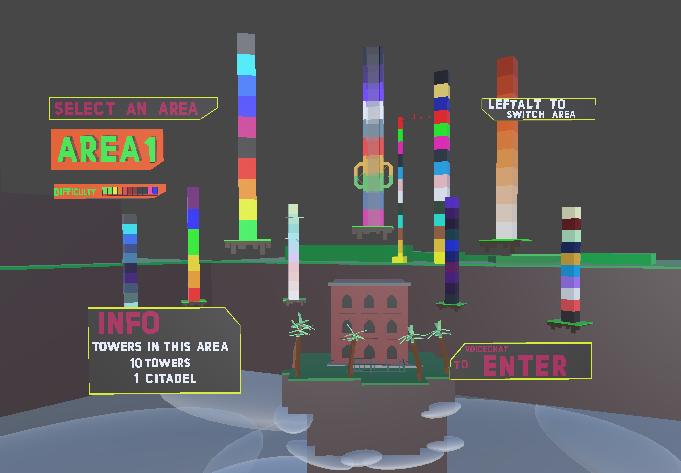
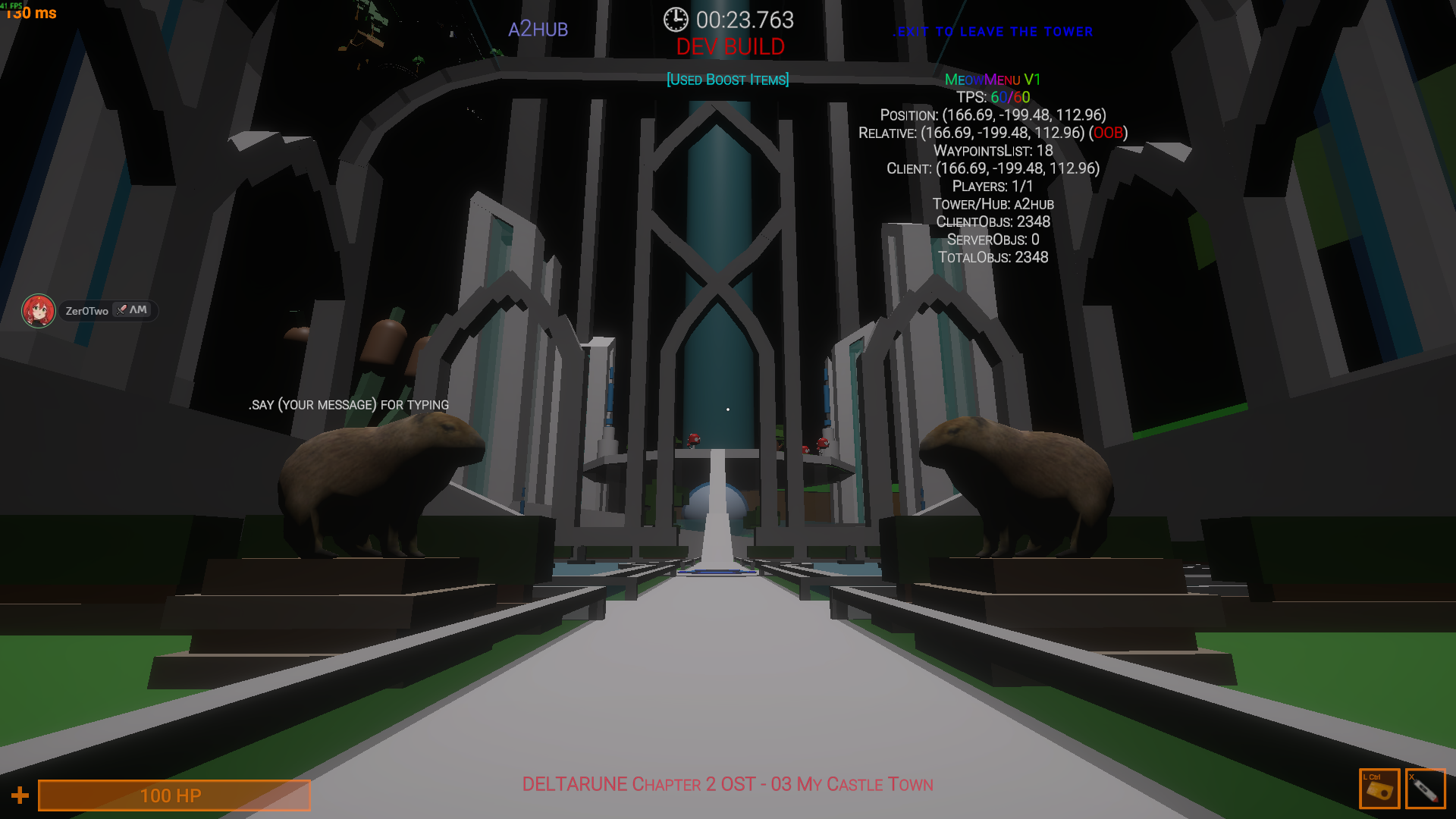
This is an entire custom gamemode recreated from the original ETOH — but done inside SCP: Secret Laboratory. Tower climbing, obstacle courses, cosmetic rewards, a live shop, real-time translations, and a map editor capable of rendering up to a million primitives. Yeah. In SL.
Main Challenges
Making a project this scale actually work in SCP:SL is a different beast entirely compared to a standard plugin. The game wasn't built for this. So instead of forcing everything into one monolithic plugin and hoping for the best, we split the project into two separate but tightly coupled systems:
- Unity side — handled through MeowEditor and
ATOS.Bridge, which lets designers build maps visually in Unity and attach custom behavior directly to schematic objects - Main Plugin (ATOS) — the server-side brain that handles everything from networking and cosmetics to database sync and anticheat
Both halves need each other. The Bridge components define what a map object does, and the main plugin provides the runtime systems that actually execute it. Neither works without the other.
Main Plugin
ATOH has accumulated a genuinely absurd number of features over its lifetime. Listing everything would take longer than writing the plugin itself, so here's the highlight reel:
- Entire networking stack rewritten to work correctly with non-existent or schematic-spawned objects that the base game has no awareness of
- Cosmetics system — auras and trails tied to player progression, updating every frame through a dedicated coroutine
- SSS (Server-Side Settings) updating in real time — player stats and tower completion tracked and displayed live on the SSS
- Real-time database sync with a working online shop — players can browse, purchase, and equip cosmetics without ever leaving the server
- Real-time translation system — every piece of text the plugin outputs can be localized, letting players from any region read and understand what's happening without a second thought
- An incredibly powerful map editor — MeowEditor makes it possible to construct anything from simple obstacle rooms to sprawling multi-floor towers, all visually in Unity
- Aggressive optimizations specifically targeting high-primitive environments and high-latency players
And that's just the surface. There's anticheat, weekly tasks, cross-server WebSocket sync, a hub server with ambient music, a builder mode flag that strips the plugin down to bare essentials for creative servers — it goes on.
How Does a Project Like This Even Exist?
ATOH was born directly from the creation of MeowEditor. Without an editor capable of placing, managing, and exporting hundreds of schematic primitives cleanly, none of the map side of this would be feasible. MeowEditor is what unlocked the scale — it makes running up to a million primitives on a single server not just possible, but stable.
The core philosophy behind ATOH is two things: optimization and accessibility. The optimization side means players on potato PCs can still navigate a tower without the server falling apart under the primitive load. The accessibility side means high-ping players — people connecting from Europe, from Asia, from wherever — can still have an enjoyable, fair experience. Networking that accounts for latency rather than punishing it was one of the hardest problems to solve, and honestly one of the things I'm most proud of in this whole codebase.
Put those two things together and you get a gamemode that actually works for a wide audience, not just people with perfect connections and high-end hardware.
And if you still don't believe any of this is real — here's a video. It's a bit of a joke, but it shows off more of the features than any writeup could: